























































































































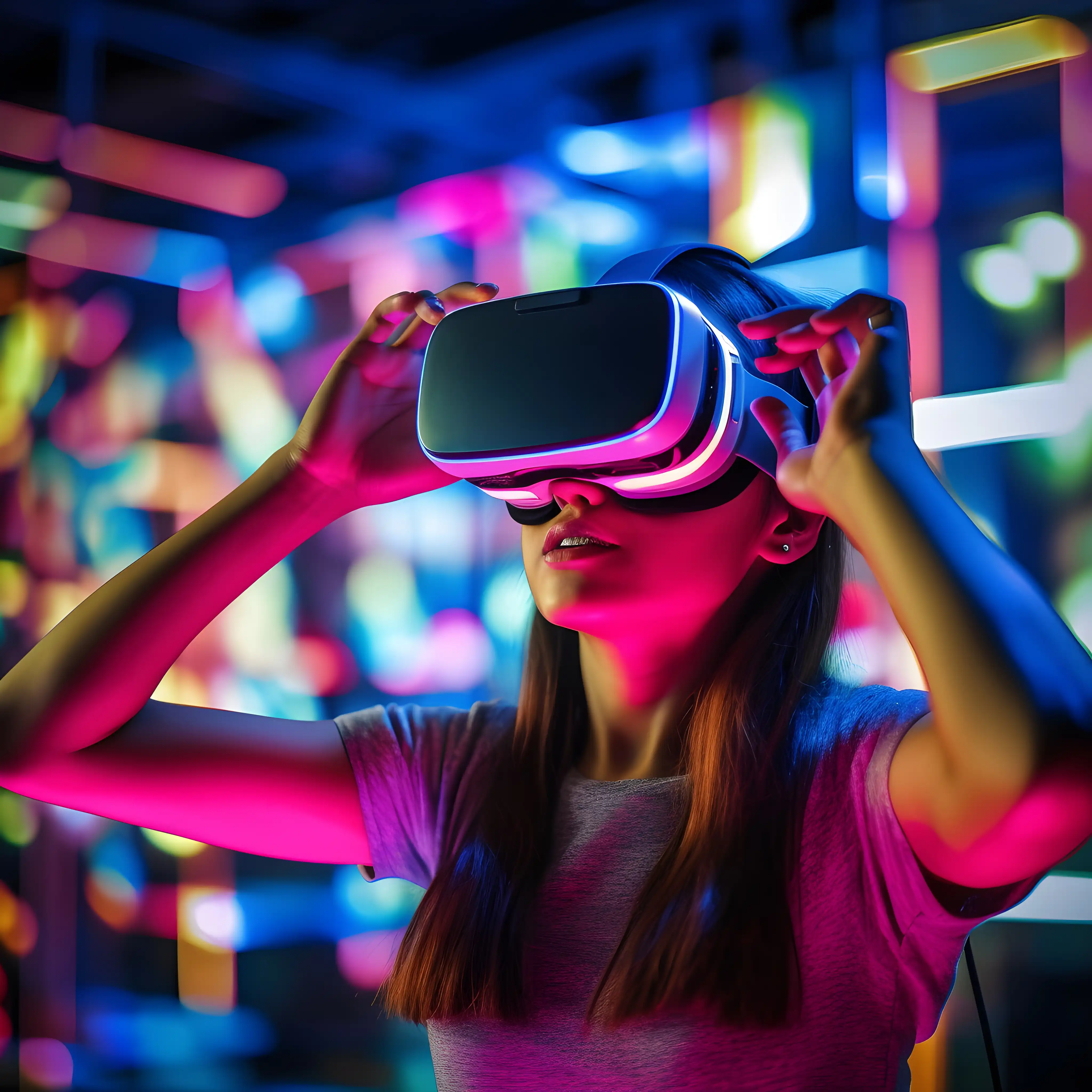
girl wearing a virtual reality headset.
Home
/Insights
/Exploring Current Trends and Future Possibilities of Virtual Reality
Virtual Reality

Exploring Current Trends and Future Possibilities of Virtual Reality

Read time 7 mins
January 1, 2024
Previous Insight2 minsRead

Tags

Virtual RealityFuture OutlookIndustriesHealthcare InnovationManufacturing IndustryHealthcare
0 Votes

Related Services

Machine LearningArtificial IntelligenceWeb3 SolutionsCyber Security

Got a question?

Send us your questions, we have the answers

Talk with us

Get expert advice to solve your biggest challenges

Book a Call

Introduction

Virtual reality (VR) technology has undergone a remarkable evolution in recent years, transcending its origins as a niche entertainment novelty to become a transformative tool with applications across various industries. In this comprehensive exploration, we dive into VR's multifaceted landscape, examining its historical development, current trends, and prospects.

The Evolution of Virtual Reality

Virtual reality dates back to the mid-20th century, with early experiments in immersive experiences conducted by researchers such as Morton Heilig in the 1950s. However, it wasn't until the late 20th and early 21st centuries that significant advancements propelled VR into the mainstream. Technological breakthroughs in graphics rendering, motion tracking, and display technologies have been instrumental in the evolution of VR.

One pivotal milestone in the history of VR was the introduction of the Oculus Rift headset in 2012, which sparked renewed interest and investment in technology. This watershed moment marked the beginning of a new era of consumer-oriented VR devices, laying the groundwork for future innovations. The global VR market has experienced exponential growth in recent years, with revenues soaring from $3.6 billion in 2017 to $21.5 billion in 2020. Projections indicate that the market is poised to reach $280 billion by 2025, reflecting a compound annual growth rate (CAGR) of 42.2% from 2020 to 2025.
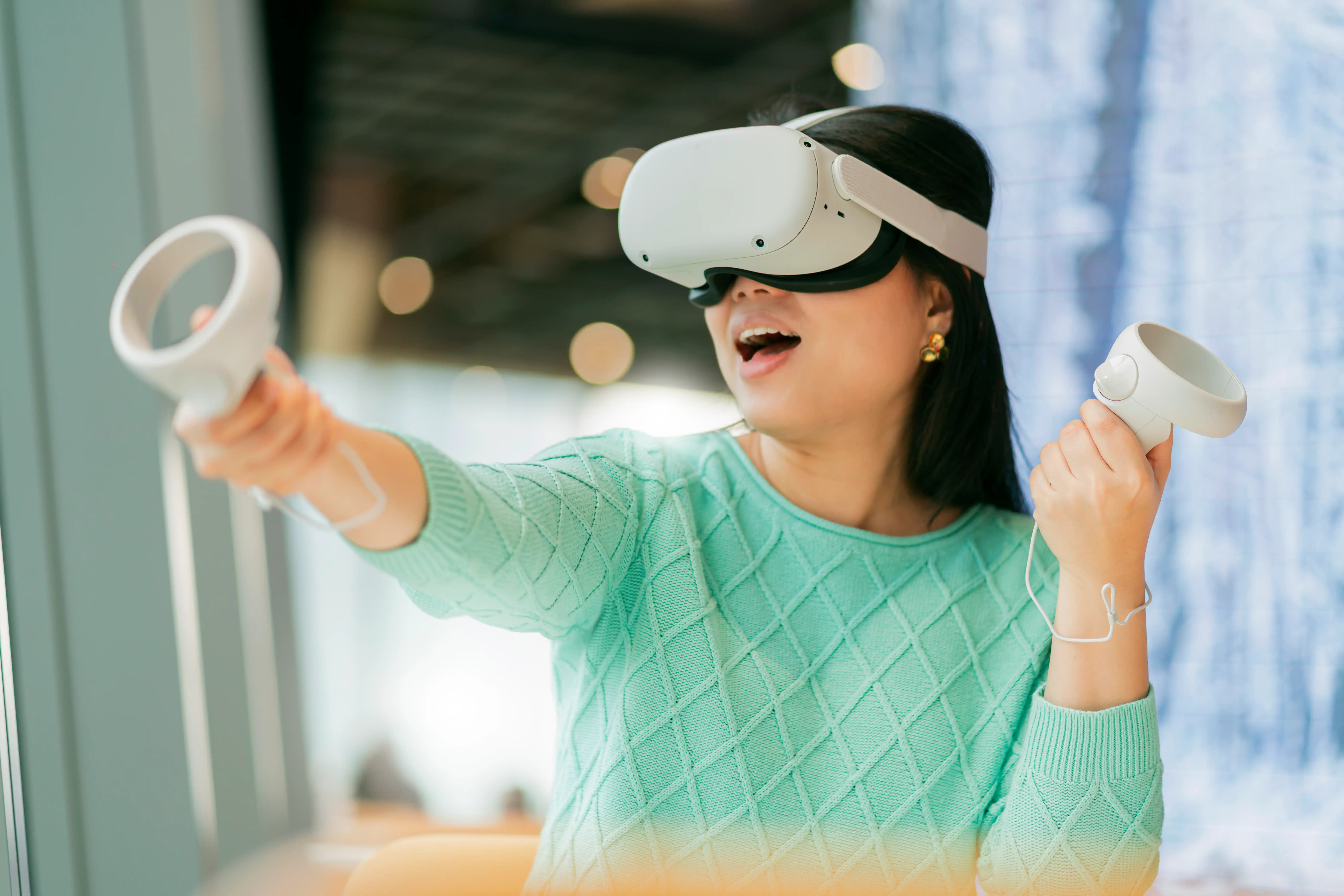
Virtual Reality in Healthcare

VR holds immense promise in healthcare, offering novel solutions for patient care, medical training, and therapeutic interventions. VR simulations enable healthcare professionals to immerse themselves in realistic scenarios, facilitating training and skill development in a safe and controlled environment. Studies have demonstrated the efficacy of VR-based medical training programs in enhancing learning outcomes and improving clinical performance. For example, research published in the Journal of the American Medical Association (JAMA) found that VR simulations led to a 38% improvement in surgical performance compared to traditional training methods.

Beyond training applications, VR is increasingly being used as a therapeutic tool for treating various medical conditions, including post-traumatic stress disorder (PTSD), chronic pain, and phobias. The immersive nature of VR experiences allows patients to confront and manage their symptoms in a controlled setting, leading to positive therapeutic outcomes. Clinical trials have shown promising results, with studies reporting significant reductions in pain levels and symptom severity among participants undergoing VR-based interventions.


Revolutionizing training and therapy, with proven efficacy in enhancing skills and improving patient outcomes.

Virtual Reality in Education

In education, VR offers unparalleled opportunities for immersive and interactive learning experiences. By simulating realistic environments and scenarios, VR enables students to engage with course material in a way that transcends traditional teaching methods. Research has consistently shown that VR-based learning enhances student engagement, retention, and knowledge acquisition. A meta-analysis published in Computers & Education examined 65 studies on VR-based learning and found that students who engaged with VR content demonstrated significantly higher learning outcomes than those using conventional instructional methods.

Moreover, VR can potentially address longstanding educational challenges, such as access to quality learning resources and opportunities for experiential learning. By leveraging VR technology, educators can provide students with virtual field trips to historical sites, virtual laboratory simulations for science experiments, and virtual collaborative environments for group projects. These immersive experiences enrich the learning process and foster critical thinking skills and creativity, enhance the learning process, and foster students' critical thinking skills and creativity.

Virtual Reality in Retail

VR is reshaping the retail landscape by revolutionizing how consumers shop and interact with products. Virtual try-on experiences allow shoppers to visualize clothing, accessories, and cosmetics in a virtual environment, enhancing the online shopping experience and reducing the likelihood of returns. Automotive manufacturers are leveraging VR to offer virtual test drives, enabling customers to explore features and configurations from their homes. Real estate companies use VR to showcase properties to prospective buyers, providing immersive virtual tours that simulate physical walkthroughs.

The adoption of VR in retail is driven by consumer demand for personalized and engaging shopping experiences. According to a report by Statista, the global VR in the retail market was valued at $1.08 billion in 2020 and is projected to reach $4.26 billion by 2027, with a CAGR of 21.7% during the forecast period. Additionally, studies reveal that VR shopping experiences drive higher engagement and conversion rates than traditional platforms.

According to a report by Grand View Research, the global VR in retail market size was valued at $787.1 million in 2020 and is expected to reach $7.3 billion by 2028, growing at a CAGR of 34.4% from 2021 to 2028. By leveraging VR, retailers create personalized, immersive experiences that foster customer loyalty and boost sales. Retailers increasingly invest in VR technology to differentiate themselves in a competitive market landscape and drive customer loyalty and satisfaction. Overall, VR offers immersive and interactive shopping experiences, and retailers can create deeper connections with consumers and increase sales conversions.

high tech being used for creating brain model
women with a vr set in a hospital office

The Future Use of Telehealth and Its Transformation of Healthcare Delivery

From remote consultations to virtual monitoring, this piece will explore how telehealth is reshaping patient care, improving access to medical services, and driving innovations in healthcare delivery, ultimately paving the way for a more accessible, efficient, and patient-centric healthcare system.

Read More
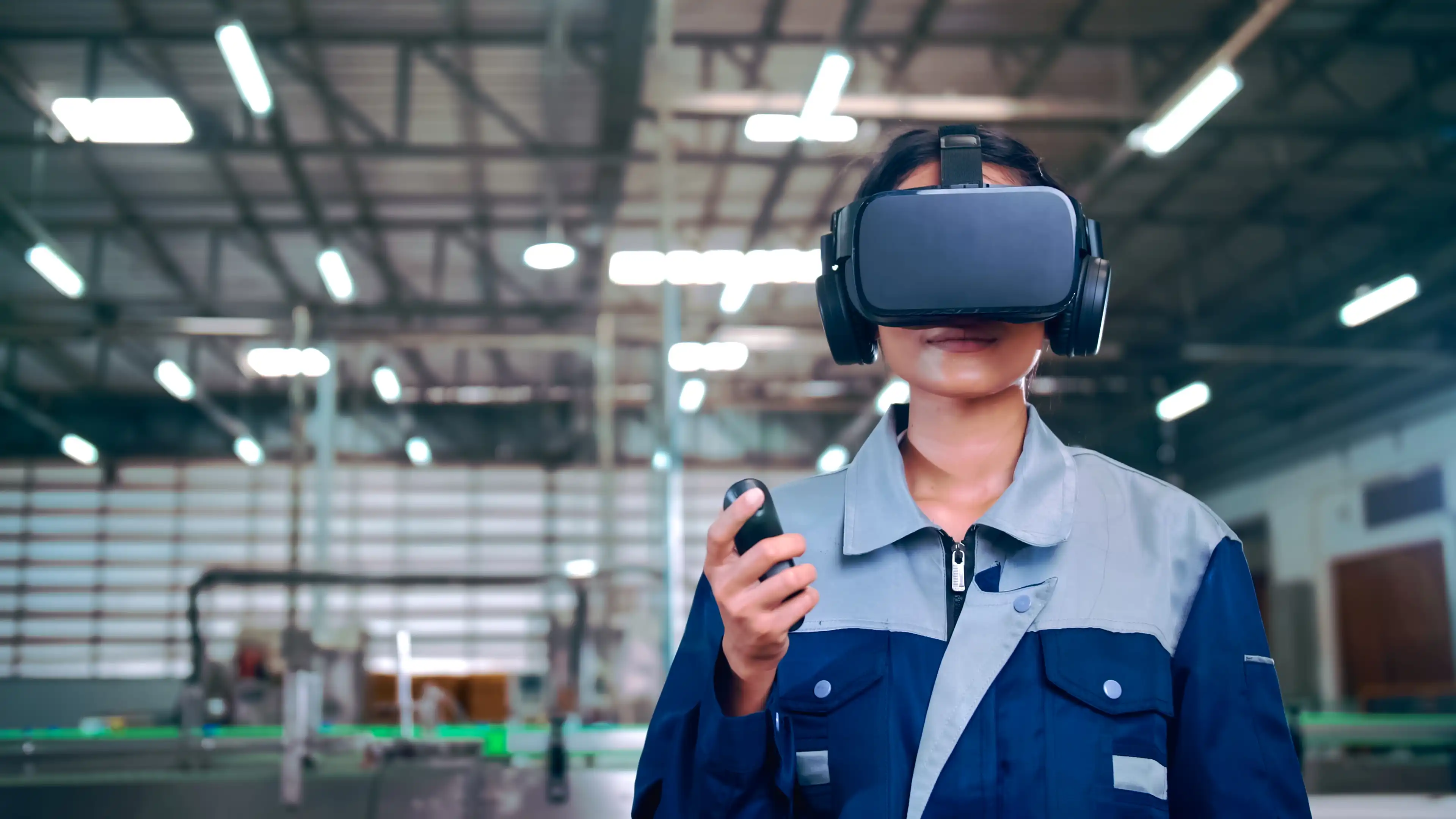
Virtual Reality in Manufacturing

In the manufacturing sector, VR revolutionizes product design, prototyping, and training processes. VR simulations enable engineers and designers to visualize and iterate on product designs in a virtual environment, reducing the need for physical prototypes and accelerating time-to-market. By immersing users in virtual assembly lines and manufacturing facilities, VR training programs enhance worker productivity and safety while minimizing downtime and errors.

Research conducted by academic institutions such as Stanford University and MIT has shown the effectiveness of VR-based training programs in manufacturing. Studies published in peer-reviewed journals such as the International Journal of Human-Computer Interaction have reported significant improvements in employee performance and retention rates following the implementation of VR training modules. For example, a study conducted by Stanford's Virtual Human Interaction Lab researchers found that participants who underwent VR-based training demonstrated a 30% improvement in task completion time compared to those trained using traditional methods.

Moreover, VR is being used for remote maintenance and troubleshooting in the manufacturing industry, allowing technicians to access virtual replicas of equipment and machinery anywhere in the world. This remote assistance capability enables faster response times and minimizes costly downtime, resulting in significant cost savings for manufacturers.

A study by the Fraunhofer Institute for Manufacturing Engineering and Automation in Germany found that companies implementing VR-based remote maintenance solutions experienced a 25% reduction in downtime and a 20% increase in equipment uptime. Furthermore, VR-enabled remote maintenance reduced travel costs and carbon emissions associated with onsite technician visits, contributing to environmental sustainability efforts.

The adoption of VR technology in manufacturing is expected to grow in the coming years, driven by the proven benefits of enhanced design visualization, training efficiency, and remote maintenance capabilities. As academic research and industry collaborations advance, we can anticipate further innovations in VR applications tailored to the specific needs and challenges of the manufacturing sector.

Engineer is using virtual reality glasses to inspect the factory's mechanical control system.

VR Impacts on Manufacturing Processes

30% improvement

A study conducted by Stanford's Virtual Human Interaction Lab researchers found that participants who underwent VR-based training demonstrated this percentage of improvement in task completion time compared to those trained using traditional methods.

25% reduction

A study by the Fraunhofer Institute for Manufacturing Engineering and Automation in Germany found that companies implementing VR-based remote maintenance solutions experienced this percentage of reduction in downtime.

20% increase

A study by the Fraunhofer Institute for Manufacturing Engineering and Automation in Germany found that companies implementing VR-based remote maintenance solutions experienced this percentage increase in equipment uptime.

Emerging Technologies and Applications

Looking ahead, emerging technologies such as augmented reality (AR), mixed reality (MR), and spatial computing are poised to expand the capabilities and applications of VR. The convergence of VR with AI, IoT, and 5G connectivity will unlock new opportunities for innovation and disruption across industries. From virtual meetings and remote collaboration to immersive storytelling and experiential marketing, the potential applications of VR are limitless.

Research initiatives and academic collaborations are driving advancements in VR technology, with institutions investing in interdisciplinary research programs to explore new frontiers in virtual reality. Breakthroughs in haptic feedback, brain-computer interfaces, and photorealistic rendering pave the way for more immersive and realistic VR experiences. As technology evolves, we can expect to see increasingly sophisticated VR applications that blur the boundaries between the physical and digital worlds.

Conclusion

In conclusion, virtual reality technology has emerged as a transformative force with far-reaching implications for industries, education, healthcare, and entertainment. The rapid evolution of VR has been fueled by advancements in hardware, software, and content creation, enabling immersive and interactive experiences that were once the stuff of science fiction. As VR continues to mature and expand its footprint, we stand on the brink of a new era of digital interaction, where the boundaries between the virtual and the real are increasingly blurred. With continued innovation and investment, VR promises to unlock new opportunities for growth, learning, and exploration in the years to come.

Related Insights

girl wearing a virtual reality headset.

Virtual Reality

Exploring Current Trends and Future Possibilities of Virtual Reality

Virtual reality (VR) technology has witnessed remarkable advancements in recent years, transforming various industries and reshaping the way we interact with digital content.

desk

How Can Marketeq Help?

InnovateTransformSucceed

Unleashing Possibilities through Expert Technology Solutions

Get the ball rolling

Click the link below to book a call with one of our experts.

Book a call
triangles

Keep Up with Marketeq

Stay up to date on the latest industry trends.

Terms Of UsePrivacyCookiesFAQ'sContact
888.455.7888
Marketeq specializes in crafting custom tailored digital solutions for enhanced growth and efficiency.
InsightsServicesIndustriesAbout UsCareers

Ā© 2011 - 2026 Marketeq Digital Inc. All Rights Reserved.

Marketeq Digital Inc. operates independently as an IT consulting firm, adhering to legal regulations and industry standards in all client engagements. Our commitment to legal compliance ensures transparency and trust in our services. We are committed to upholding the highest standards of legal compliance and ethical conduct in all aspects of our operations. We understand the importance of transparency and trust in our client relationships, which is why we prioritize legal integrity and regulatory adherence. Our team of experts adheres to all relevant laws, regulations, and industry standards, ensuring that our services are delivered with professionalism and accountability.

Terms Of UsePrivacyCookiesFAQ'sContact

Switching language...

Select Language​▼
    Lang
    Global - English
    Lang
    Abkhazia - Abkhaz
    Lang
    Afghanistan - Dari
    Lang
    Afghanistan - Pashto
    Lang
    Albania - Shqiptar
    Lang
    Ancient India - Sanskrit
    Lang
    Armenia - Armenian
    Lang
    Azerbaijan - Azerbaijani
    Lang
    Bangladesh - Bengali
    Lang
    Belarus - Belarusian
    Lang
    Benin - Fon
    Lang
    Bhutan - Dzongkha
    Lang
    Bolivia - Aymara
    Lang
    Bosnia and Herzegovina - Bosnian
    Lang
    Botswana - Tswana
    Lang
    Brazil - Hunsrik
    Lang
    Bulgaria - Bulgarian
    Lang
    Burundi - Rundi
    Lang
    Cambodia - Khmer
    Lang
    Canada - French (Canada)
    Lang
    Canada - Inuktut (Latin)
    Lang
    Canada - Inuktut (Syllabics)
    Lang
    Central African Republic - Sango
    Lang
    China - Mandarin (Simplified)
    Lang
    China - Hmong
    Lang
    China - Xinjiang - Uyghur
    Lang
    Crimea - Crimean Tatar (Cyrillic)
    Lang
    Crimea - Crimean Tatar (Latin)
    Lang
    Croatia - Croatian
    Lang
    CuraƧao - Papiamento
    Lang
    Czech Republic - Czech
    Lang
    Denmark - Danish
    Lang
    Djibouti - Afar
    Lang
    DR Congo - Kikongo
    Lang
    DR Congo - Lingala
    Lang
    DR Congo - Tshiluba
    Lang
    Eritrea and Ethiopia - Tigrinya
    Lang
    Estonia - Estonian
    Lang
    Eswatini - Swati
    Lang
    Ethiopia - Amharic
    Lang
    Ethiopia - Oromo
    Lang
    Faroe Islands - Faroese
    Lang
    Fiji - Fijian
    Lang
    Finland - Finnish
    Lang
    France - Breton
    Lang
    France - Corsican
    Lang
    France - FranƧais
    Lang
    France - Occitan
    Lang
    French Polynesia - Tahitian
    Lang
    Georgia - Georgian
    Lang
    Germany - German
    Lang
    Ghana - Ga
    Lang
    Ghana - Akan
    Lang
    Global - Arabic
    Lang
    Global - Esperanto
    Lang
    Global - Romani
    Lang
    Global - Yiddish
    Lang
    Greece - Greek
    Lang
    Greenland - Kalaallisut
    Lang
    Guam - Chamorro
    Lang
    Guatemala - Mam
    Lang
    Guatemala - Qʼeqchiʼ
    Lang
    Guinea - NKo
    Lang
    Guinea - Susu
    Lang
    Haiti - Haitian Creole
    Lang
    Hong Kong - Cantonese
    Lang
    Hungary - Hungarian
    Lang
    Iceland - Icelandic
    Lang
    India - Assamese
    Lang
    India - Awadhi
    Lang
    India - Bhojpuri
    Lang
    India - Dogri
    Lang
    India - Gujarati
    Lang
    India - Hindi
    Lang
    India - Kannada
    Lang
    India - Khasi
    Lang
    India - Kokborok
    Lang
    India - Konkani
    Lang
    India - Maithili
    Lang
    India - Malayalam
    Lang
    India - Marathi
    Lang
    India - Marwadi
    Lang
    India - Meiteilon (Manipuri)
    Lang
    India - Mizo
    Lang
    India - Odia (Oriya)
    Lang
    India - Punjabi
    Lang
    India - Santali (Latin)
    Lang
    India - Santali (Ol Chiki)
    Lang
    India - Tamil
    Lang
    India - Telugu
    Lang
    India - Tulu
    Lang
    Indonesia - Acehnese
    Lang
    Indonesia - Balinese
    Lang
    Indonesia - Batak Karo
    Lang
    Indonesia - Batak Simalungun
    Lang
    Indonesia - Batak Toba
    Lang
    Indonesia - Betawi
    Lang
    Indonesia - Bahasa Indonesia
    Lang
    Indonesia - Jawa
    Lang
    Indonesia - Madurese
    Lang
    Indonesia - Makassar
    Lang
    Indonesia - Minang
    Lang
    Indonesia - Sundanese
    Lang
    Iran - Persian
    Lang
    Iraq - Kurdish
    Lang
    Iraq - Kurdish (Sorani)
    Lang
    Ireland - Irish
    Lang
    Isle of Man - Manx
    Lang
    Israel - Hebrew
    Lang
    Italy - Friulian
    Lang
    Italy - Italiano
    Lang
    Italy - Ligurian
    Lang
    Italy - Lombard
    Lang
    Italy - Sicilian
    Lang
    Italy - Venetian
    Lang
    Ivory Coast - BaoulƩ
    Lang
    Ivory Coast - Dyula
    Lang
    Jamaica - Jamaican Patois
    Lang
    Japan - Japanese
    Lang
    Kazakhstan - Kazakh
    Lang
    Kenya - Luo
    Lang
    Kyrgyzstan - Kyrgyz
    Lang
    Laos - Lao
    Lang
    Latvia - Latgalian
    Lang
    Latvia - Latvian
    Lang
    Lesotho - Sesotho
    Lang
    Lithuania - Lithuanian
    Lang
    Luxembourg - Luxembourgish
    Lang
    Madagascar - Malagasy
    Lang
    Malawi - Nyanja (Chichewa)
    Lang
    Malawi - Tumbuka
    Lang
    Malaysia - Iban
    Lang
    Malaysia - Malay
    Lang
    Malaysia - Malay (Jawi)
    Lang
    Maldives - Dhivehi
    Lang
    Mali - Bamanankan
    Lang
    Malta - Maltese
    Lang
    Marshall Islands - Marshallese
    Lang
    Mauritius - Mauritian Creole
    Lang
    Mexico - Nahuatl (Eastern Huasteca)
    Lang
    Mexico - Yucatec Maya
    Lang
    Mexico - Zapotec
    Lang
    Micronesia - Chuukese
    Lang
    Mongolia - Mongolian
    Lang
    Morocco - Tamazight
    Lang
    Morocco - Tamazight (Tifinagh)
    Lang
    Myanmar - Hakha Chin
    Lang
    Myanmar - Jingpo
    Lang
    Myanmar - Shan
    Lang
    Myanmar (Burma) - Myanmar (Burmese)
    Lang
    Nepal - Nepalbhasa (Newari)
    Lang
    Nepal - Nepali
    Lang
    Netherlands - Dutch
    Lang
    Netherlands - Frysk
    Lang
    Netherlands - Limburgish
    Lang
    New Zealand - Maori
    Lang
    Nigeria - Hausa
    Lang
    Nigeria - Igbo
    Lang
    Nigeria - Kanuri
    Lang
    Nigeria - Tiv
    Lang
    Nigeria - Yoruba
    Lang
    North Macedonia - Macedonian
    Lang
    Norway - Norwegian
    Lang
    Pakistan - Baluchi
    Lang
    Pakistan - Punjabi (Shahmukhi)
    Lang
    Pakistan - Urdu
    Lang
    Pakistan - Sindh - Sindhi
    Lang
    Papua New Guinea - Tok Pisin
    Lang
    Paraguay - Guarani
    Lang
    Peru - Quechua
    Lang
    Philippines - Bikol
    Lang
    Philippines - Cebuano
    Lang
    Philippines - Filipino (Tagalog)
    Lang
    Philippines - Hiligaynon
    Lang
    Philippines - Ilocano
    Lang
    Philippines - Kapampangan
    Lang
    Philippines - Pangasinan
    Lang
    Philippines - Waray
    Lang
    Poland - Polish
    Lang
    Poland - Silesian
    Lang
    Portugal - PortuguĆŖs
    Lang
    Portugal - Portuguese (Portugal)
    Lang
    Republic of Congo - Kituba
    Lang
    Romania - Română
    Lang
    Russia - Russian
    Lang
    Russia (Bashkortostan) - Bashkir
    Lang
    Russia (Buryatia) - Buryat
    Lang
    Russia (Chechnya) - Chechen
    Lang
    Russia (Chuvashia) - Chuvash
    Lang
    Russia (Dagestan) - Avar
    Lang
    Russia (Komi Republic) - Komi
    Lang
    Russia (Mari El) - Meadow Mari
    Lang
    Russia (North Ossetia) - Ossetian
    Lang
    Russia (Sakha) - Yakut
    Lang
    Russia (Tatarstan) - Tatar
    Lang
    Russia (Tuva) - Tuvan
    Lang
    Russia (Udmurtia) - Udmurt
    Lang
    Rwanda - Kinyarwanda
    Lang
    Samoa - Samoan
    Lang
    Sapmi - Sami (North)
    Lang
    Scotland - Scots Gaelic
    Lang
    Senegal - Wolof
    Lang
    Serbia - Serbian
    Lang
    Seychelles - Seychellois Creole
    Lang
    Sierra Leone - Krio
    Lang
    Slovakia - Slovak
    Lang
    Slovenia - Slovenian
    Lang
    Somalia - Somali
    Lang
    South Africa - Afrikaans
    Lang
    South Africa - Sepedi
    Lang
    South Africa - Tsonga
    Lang
    South Africa - Venda
    Lang
    South Africa - IsiXhosa
    Lang
    South Africa - IsiZulu
    Lang
    South Korea - Korean
    Lang
    South Sudan - Dinka
    Lang
    South Sudan - Nuer
    Lang
    Spain - Basque
    Lang
    Spain - Catalan
    Lang
    Spain - Galego
    Lang
    Spain - Latin
    Lang
    Spain - EspaƱol
    Lang
    Sri Lanka - Sinhala (Sinhalese)
    Lang
    Sweden - Swedish
    Lang
    Taiwan - Mandarin (Traditional)
    Lang
    Tajikistan - Tajik
    Lang
    Tanzania - Kiswahili
    Lang
    Thailand - Thai
    Lang
    Tibet - Tibetan
    Lang
    Timor-Leste - Tetum
    Lang
    Togo - Ewe
    Lang
    Tonga - Tongan
    Lang
    Turkey - Turkish
    Lang
    Turkmenistan - Turkmen
    Lang
    Uganda - Acholi
    Lang
    Uganda - Alur
    Lang
    Uganda - Kiga
    Lang
    Uganda - Luganda
    Lang
    Ukraine - Ukrainian
    Lang
    United Kingdom - English
    Lang
    United States - English
    Lang
    United States - Hawaiian
    Lang
    Uzbekistan - Uzbek
    Lang
    Vietnam - Vietnamese
    Lang
    Wales - Welsh
    Lang
    West Africa - Fulani
    Lang
    Zambia - Bemba
    Lang
    Zimbabwe - Dombe
    Lang
    Zimbabwe - Ndau
    Lang
    Zimbabwe - Ndebele (South)
    Lang
    Zimbabwe - Shona
    Original text
    Rate this translation
    Your feedback will be used to help improve Google Translate

    This site uses cookies

    By continuing to the browse, you agree to our use of cookies. These small text files are stored on your device to enhance your browsing experience and analyze site usage. You can manage or disable cookies in your browser settings Cookies Policy