


























































































































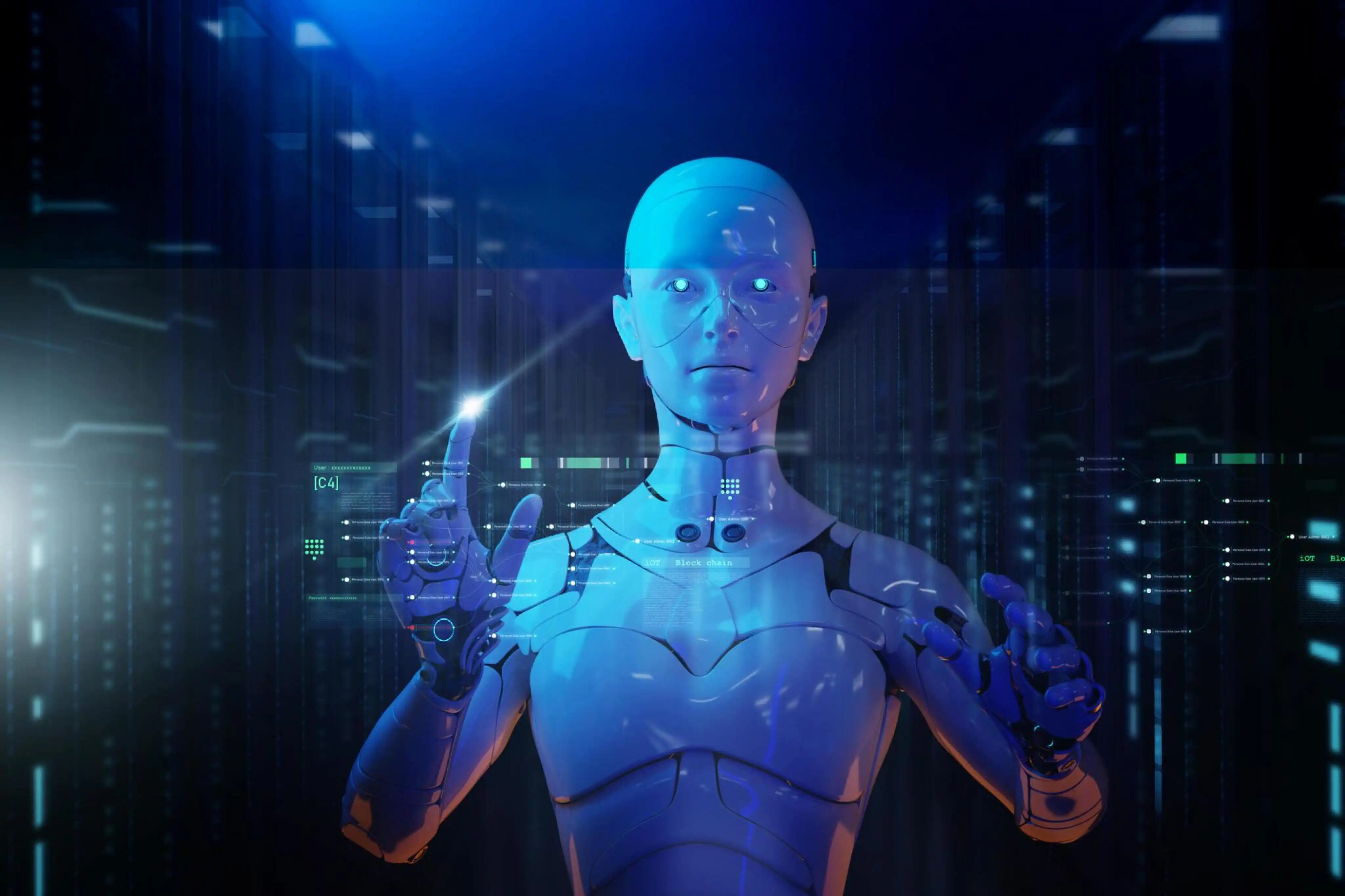
Futuristic AI-powered business analysis interface with glowing data visualizations
/The End of Static Software and How Agentic AI is Creating Living Applications
Artificial Intelligence

The End of Static Software and How Agentic AI is Creating Living Applications

Read time 6 mins
July 5, 2026

Got a question?

Send us your questions, we have the answers

Talk with us

Get expert advice to solve your biggest challenges

Book a Call

The Death of the Dashboard

By 2026, the "user-friendly" interface has become a tax on productivity. For decades, we have been sold the lie that better software means better dashboards. We have spent billions building digital cockpits filled with buttons, toggles, and menus, forcing high-level talent to act as glorified data-entry clerks. This is the "Old World" of Deterministic Software. Rigid, reactive, and fundamentally dumb. It waits for a human to click a button before it moves an inch.

The shift from deterministic to Probabilistic Software marks the most significant architectural pivot in the history of computing. We are moving away from "If X, then Y" logic toward systems that understand intent, anticipate needs, and execute outcomes. This is not about making software "easier to use." The most sophisticated software of 2026 should not be "used" at all. It should work for you while you focus on strategy, not clicks.

Hyper-realistic robot cyborg with illuminated neural circuitry representing the next generation of autonomous software agents

Defining the "Living" Application

The term "Generative AI" is already a relic of 2024. In the Old World, we marveled at Large Language Models (LLMs) that could write paragraphs and answer trivia. This was the "party trick" phase. The real revolution is the emergence of Large Action Models (LAMs). An LLM explains the work; a LAM executes the work. A "Living Application" is software built on LAM architecture that operates with genuine autonomy, real-time adaptability, and contextual memory.

A "Living" application does not sit idle on a server. It observes. It orients. It decides. It acts. It continuously runs a loop modeled on the OODA framework. Static software is a monument to human labor. Every button you see represents a task the software was too dumb to handle on its own.

"We are witnessing the end of software as a tool and the birth of software as an agent. The most sophisticated software of 2026 should not be used at all. It should work for you while you focus on strategy, not clicks."
Futuristic cyber network with glowing blue connections
Professional using holographic interface technology

Build Living Applications with Agentic AI

Your enterprise software doesn't have to sit idle waiting for clicks. We architect agentic AI systems that observe, adapt, and execute—turning static dashboards into autonomous partners that drive outcomes while your team focuses on strategy.

Explore AI Services

Autonomy and the Departure from the Trigger

Traditional software is a series of dead ends. It is built on "If/Then" logic that requires a human to initiate every single action. A Living Application operates on a closed-loop system. It does not need a "Submit" button. It does not need a human to review an alert. It is not a dashboard waiting to be read; it is a digital operative completing missions.

Imagine an application that identifies a goal like "Optimize Supply Chain for Q3" and then autonomously negotiates with supplier APIs, re-routes logistics based on real-time weather data, adjusts procurement orders based on predictive demand models, and presents you with a completed, optimized plan. Your role is not to "operate" the software. Your role is to set the strategic objective and approve the outcome.

Luminous artificial intelligence brain surrounded by swirling digital particles, visualizing the autonomous decision-making of living applications

Adaptability and the End of the Fixed UI

The greatest failure of traditional UX is the fixed layout. For twenty years, we have been obsessed with "pixel-perfect" designs. Static screens that look the same for every user, every day. Living Applications possess what we call a "Fluid UI." An interface that has no permanent shape. It re-configures itself based on who is looking at it, what they need, and what the current context demands.

For a CFO logging in on Monday morning, it surfaces the weekend's financial anomalies. For a supply chain manager, it foregrounds the shipments at risk. The interface is not "personalized." It is context-aware and purpose-driven. The user does not navigate the software; the software navigates to the user.

Memory and Contextual Awareness Over Cold Data Storage

Traditional databases are digital graveyards; they store facts but understand nothing. A Living Application does not merely store that "Client X placed an order on March 5th." It remembers that Client X always increases orders in Q2, that their last three orders had a 12% variance from forecast, and that their payment terms were recently renegotiated.

When software "lives," it grows smarter with every second of uptime. It becomes the institutional memory that no employee can replicate and no spreadsheet can contain. It knows your business not as a collection of data points, but as a living, breathing narrative with patterns, preferences, and predictions.

From Personalization to Hyper-Individualization

Personalization used to mean putting a user's name in a subject line or remembering their last search query. In the era of Living Applications, two users sitting in the same office, logged into the same application, with the same job title, will see entirely different experiences. The application is not just personalized. It is hyper-individualized.

It understands your cognitive style. It knows whether you prefer data in charts or tables. It learns the time of day you are most likely to make strategic decisions versus tactical ones. It adapts its communication style. Verbose for the analytical thinker. Concise for the action-oriented executive.

Luminous neural network synapses representing AI data processing at scale

The Measurable Impact of Agentic AI

Enterprise adoption of agentic AI systems is accelerating. The numbers reveal a clear pattern, organizations that deploy living applications gain compounding advantages in speed, efficiency, and strategic capacity.

82%

of enterprise leaders say agentic AI will fundamentally transform their business operations within 2 years (McKinsey, 2026)

10x

faster OODA loop completion in organizations using autonomous AI agents versus traditional dashboard-driven workflows

40%

reduction in revenue leakage reported by enterprises deploying AI-driven autonomous financial operations (Gartner, 2025)

Predictive Intent and the Zero-Click Experience

The hallmark of high-end software is no longer "ease of use." It is the total elimination of use. The "Zero-Click" experience means the application has already done the work before you even think to ask. If the system detects a discrepancy in a supply chain report, it does not just highlight it in red. It has already traced the discrepancy to its source, cross-referenced it against historical patterns, drafted a corrective action, and queued it for your approval.

The user's only interaction is a single confirmation. The cognitive load has been reduced from "analyze, decide, act" to simply "approve." This is not a marginal improvement in UX. It is an entirely new relationship between human and machine.

The Role of Agentic AI in Financial Growth

In the high-stakes environment of 2026, growth is no longer a byproduct of working harder. It is a direct output of working with intelligent systems. Revenue leakage is the silent killer of the static enterprise. It occurs in the gaps between systems, in the delays of human processing, in the misalignment of data across departments. A Living Application eliminates these gaps entirely.

Revenue leakage is the silent killer of the static enterprise. It occurs in the gaps between systems, in the delays of human processing, in the misalignment of data across departments. A Living Application eliminates these gaps by continuously auditing, reconciling, and optimizing financial flows in real time. Every dollar that used to slip through the cracks is now captured, tracked, and reinvested.

Futuristic city skyline illuminated at night
Glowing artificial intelligence brain with neural pathways

Transform Your Enterprise with Intelligent Software

The window for static software is closing. We help organizations navigate the architectural pivot from deterministic tools to probabilistic systems—building self-healing, self-optimizing platforms that compound in value with every interaction.

Explore Digital Transformation

The Speed of Execution

In a 2026 AI economy, the primary competitive metric is the speed of your OODA loop. Observe. Orient. Decide. Act. In a traditional enterprise, this loop takes days or weeks. A market shift happens; it takes a day for the data to be compiled, another day for it to be analyzed, a week for a meeting to be scheduled, and another week for a decision to be implemented.

When your software can complete ten OODA loops in the time it takes a competitor to finish one, you are not just faster. You are operating in a different dimension of business velocity. The compounding advantage is not linear; it is exponential.

Silhouette of a visionary business leader against a luminous digital horizon, symbolizing the strategic pivot from static tools to living applications

Technical Architecture of the Future

The architectural blueprints of 2024 are officially obsolete. If you are still building "microservices that talk to a central database," you are constructing a digital museum. The architecture of 2026 demands Agentic Orchestration. In the Old World, microservices were siloed functions. In the New World, they are autonomous agents that negotiate with each other, share context, and dynamically allocate resources based on real-time system needs.

Self-Healing Systems represent the most profound shift, the move from "monitoring and alerting" to "predicting and resolving." When an infrastructure component begins to show signs of degradation, the system does not send you an alert at 3 AM. It has already spun up a replacement, re-routed traffic, and logged the incident for your morning review. Data Sovereignty and Guardrails ensure that with the global enforcement of regulations like the EU AI Act, every Living Application must be built with embedded compliance. Not as an afterthought, but as a core architectural principle.

The Human Element

As software moves toward the "Autopilot" phase, the fundamental relationship between humans and their tools must be redefined. A Living Application is not a tool you wield; it is a team member you manage. This shift requires a total psychological re-alignment. You do not "use" a teammate; you delegate to them, collaborate with them, and trust their judgment within defined boundaries.

The transition from "Co-Pilot" to "Autopilot" is paved with a single, difficult word. Trust. Building that trust requires transparency. Every autonomous decision the system makes must be explainable, auditable, and reversible. The human is not removed from the loop; the loop is simply elevated from tactical execution to strategic oversight.

"The future of software is not a destination you visit; it is a partner that moves with you, learns from you, and ultimately makes you irreplaceable. Not because you operate the machine, but because you direct it."

Embracing the Fluid Future

The window of opportunity for the static enterprise is officially closed. By 2027, Gartner predicts that 50% of all enterprise software interactions will be "zero-click" and completed autonomously by agentic AI before a human is even aware of the need. Static software is a relic of an era where we had the luxury of time. Time to wait. Time to click. Time to analyze. That era is over.

A Living Application is a self-fortifying asset. Because it learns from every interaction, every market shift, and every internal process, it becomes more valuable over time. It is not a depreciating cost; it is an appreciating investment. For leaders, the mandate is clear. Audit for agency. Define the guardrails. Build for outcomes, not features. Stop buying "tools" with a list of features. Start investing in systems that deliver measurable business outcomes autonomously. The future of software is not a destination you visit; it is a partner that moves with you.

Related Insights

Robot analyzing data on virtual interface

Artificial Intelligence

AI and Predictive Modeling by Uncovering Patterns and Trends

Organizations constantly seek innovative ways to gain a competitive edge in today's data-driven world. One such groundbreaking technology that has revolutionized various industries is artificial intelligence (AI). With its ability to process vast amounts of data and uncover hidden insights, AI has significantly enhanced predictive modeling.

Robot interacting with holographic display

Artificial Intelligence

AI in Manufacturing by Streamlining Operations and Predictive Maintenance

The manufacturing industry has always been at the forefront of technological advancements, constantly seeking ways to enhance efficiency, productivity, and profitability. In recent years, integrating artificial intelligence (AI) into manufacturing processes has become a game-changer. AI-powered systems are revolutionizing how operations are streamlined and maintenance is conducted, leading to significant improvements in productivity, cost savings, and overall operational performance. This article explores the transformative impact of AI in manufacturing, with a specific focus on streamlining operations and predictive maintenance.

desk

How Can Marketeq Help?

InnovateTransformSucceed

Unleashing Possibilities through Expert Technology Solutions

Get the ball rolling

Click the link below to book a call with one of our experts.

Book a call
triangles

Keep Up with Marketeq

Stay up to date on the latest industry trends.